The Future of Threat Intelligence: From Reactive to Predictive
Learn how modern threat intelligence platforms are evolving from reactive IOC feeds to predictive, contextualized intelligence that anticipates threats before they strike.
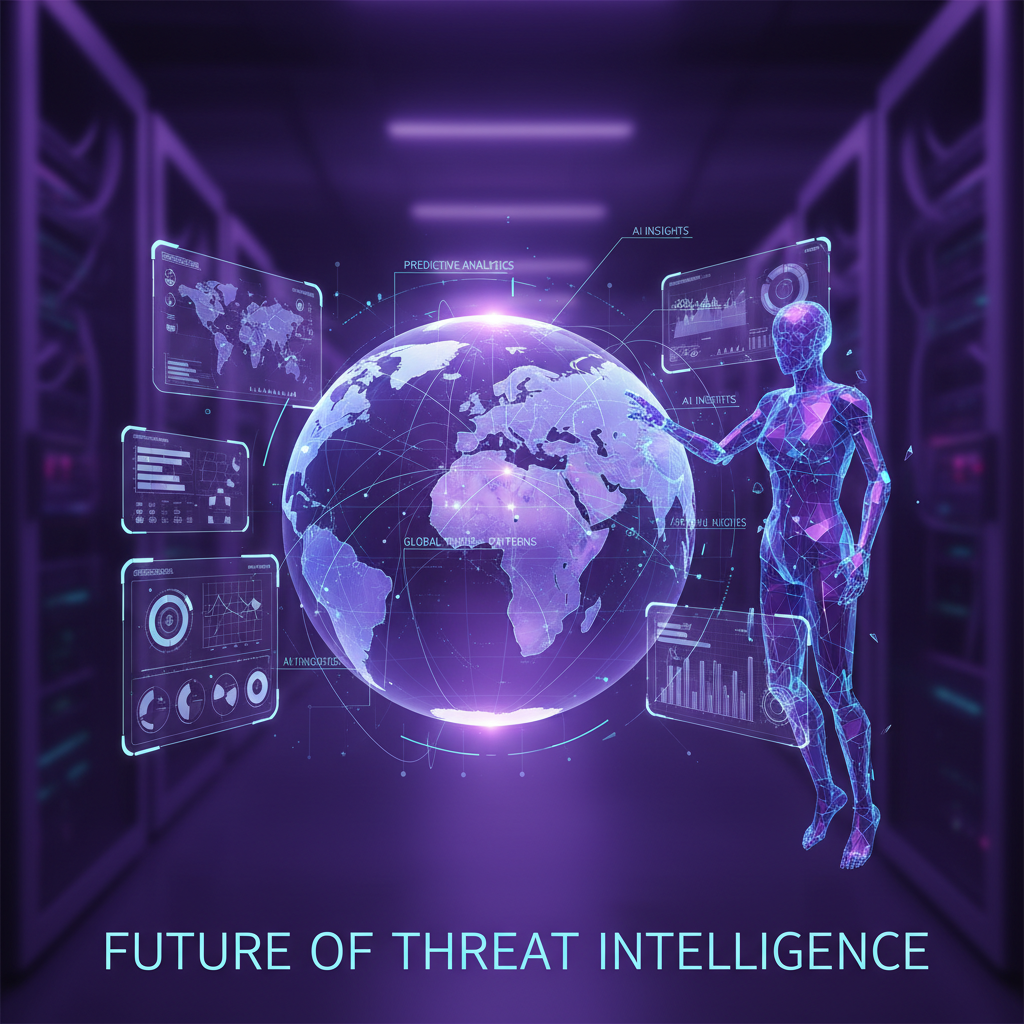
The Threat Intelligence Evolution
Threat intelligence has come a long way from simple lists of known-bad IP addresses and malware hashes. Today's security landscape demands intelligence that is:
- Predictive rather than reactive
- Contextualized to your specific environment
- Actionable without manual interpretation
- Continuously updated in real-time
Traditional Threat Intelligence: Limitations
The Feed-Based Model
Most organizations consume threat intelligence through feeds:
- IOC lists (IPs, domains, file hashes)
- STIX/TAXII formatted data
- Vendor-specific threat reports
- Open-source intelligence (OSINT)
Problems with this approach:
- Reactive by nature - You learn about threats after they've been discovered elsewhere
- Context-free - Generic IOCs without environmental relevance
- High noise - Most IOCs are irrelevant to your infrastructure
- Short shelf life - Attackers change tactics quickly, making IOCs stale
- Manual correlation - Analysts must connect dots across multiple sources
The "Too Much Data, Not Enough Intelligence" Problem
Security teams are drowning in threat data:
- 15,000+ IOCs per day from feeds
- Hundreds of threat reports weekly
- Millions of global security events
- Countless vulnerability announcements
Result: Analysts spend more time managing data than acting on intelligence.
The New Paradigm: Predictive Threat Intelligence
From Data to Insights
Modern threat intelligence platforms shift focus from collecting data to generating actionable insights:
Traditional Approach:
Threat Feed → IOC List → Manual Review → Detection RulesPredictive Approach:
Multi-Source Intelligence → AI Analysis → Contextualization →
Automated Risk Assessment → Proactive Mitigation
Key Capabilities of Predictive Systems
1. Attack Pattern Recognition
Rather than focusing on specific IOCs, predictive systems identify attack patterns:
- Behavioral signatures - How attackers operate, not just what tools they use
- Tactical trends - Emerging techniques and procedures (TTPs)
- Campaign tracking - Connecting related activities across time and geography
- Adversary profiling - Understanding threat actor capabilities and motivations
Example: Instead of blocking a single C2 domain, the system recognizes the adversary's infrastructure patterns and predicts their next move—blocking entire campaigns before they reach your network.
2. Environmental Contextualization
Generic threat intelligence is transformed into relevant, prioritized insights:
Raw Intelligence: "CVE-2025-12345 actively exploited in the wild"

Contextualized Intelligence:
├── Affected systems in your environment: 23 servers
├── Business criticality: High (production payment systems)
├── Exploit availability: Public PoC available
├── Attack likelihood: HIGH - Active campaigns targeting your industry
└── Recommended action: Emergency patch within 24 hours
3. Threat Actor Attribution and Tracking
Understanding who is targeting you enables better defense:
- Industry-specific threats - Focus on actors targeting your sector
- Geographic patterns - Understand regional threat landscapes
- Capability assessment - Prioritize based on adversary sophistication
- Historical context - Learn from how they've operated before
4. Automated Threat Hunting
AI-powered systems proactively search for threats:
- Hypothesis generation - Based on emerging threat patterns
- Anomaly correlation - Connecting subtle indicators
- Deep log analysis - Finding needles in data haystacks
- Historical investigation - Checking if threats existed before detection
Real-World Applications
Use Case 1: Supply Chain Risk Prediction
Scenario: Your organization uses thousands of third-party components.
Predictive Intelligence:
- Monitors open-source projects for suspicious changes
- Tracks developer account compromises
- Analyzes package update patterns for anomalies
- Predicts supply chain attack likelihood
- Alerts before malicious packages are deployed
Impact: Prevented a major supply chain compromise 3 weeks before it was publicly disclosed.
Use Case 2: Ransomware Campaign Forecasting
Scenario: New ransomware variant emerges.
Traditional Approach:
- Wait for IOCs from ISAC
- Create detection rules
- Deploy signatures
- Hope you weren't already infected
Predictive Approach:
- Identify ransomware family based on code similarities
- Predict likely attack vectors and targets (based on historical patterns)
- Preemptively block predicted C2 infrastructure
- Implement compensating controls for expected TTPs
- Alert on any related reconnaissance activity
Result: Prevented infection rather than detecting it post-compromise.
Use Case 3: Targeted Attack Prevention
Scenario: APT group begins reconnaissance against your industry.
Predictive Intelligence:
- Detects uptick in scanning of industry-specific applications
- Correlates with threat actor's historical targeting
- Predicts likely attack chain and entry points
- Recommends preemptive hardening measures
- Deploys custom detection logic for expected TTPs
Outcome: Attack stopped at reconnaissance phase, never reaching exploitation.
Building a Predictive Threat Intelligence Program
Stage 1: Foundation (Months 1-3)
Establish baseline capabilities:
- Centralize threat intelligence feeds
- Implement threat intelligence platform (TIP)
- Integrate with existing security tools (SIEM, EDR, firewall)
- Build asset and user context databases
- Train team on threat intelligence fundamentals
Stage 2: Contextualization (Months 4-6)
Make intelligence relevant:
- Map threats to your specific environment
- Prioritize based on business impact
- Automate IOC enrichment and validation
- Develop threat actor profiles for your industry
- Create custom detection logic
Stage 3: Prediction (Months 7-12)
Move from reactive to proactive:
- Implement AI/ML for pattern recognition
- Deploy automated threat hunting workflows
- Build predictive risk models
- Establish early warning systems
- Create feedback loops for continuous improvement
Stage 4: Orchestration (Ongoing)
Automate response:
- Automated blocking of predicted threats
- Dynamic security policy adjustments
- Proactive vulnerability remediation
- Coordinated defense across security layers
- Continuous learning and model refinement
Technology Stack for Predictive Intelligence
Core Components
Threat Intelligence Platform (TIP)
- Aggregates feeds from multiple sources
- Deduplicates and normalizes data
- Provides API access for automation
AI/ML Engine
- Pattern recognition and clustering
- Anomaly detection
- Predictive modeling
- Natural language processing (for report analysis)
Contextual Database
- Asset inventory
- User behavioral baselines
- Business criticality mappings
- Historical incident data
Orchestration Layer
- Automated workflows
- Integration with security tools
- Response automation
- Feedback collection
Data Sources
Internal:
- SIEM and log data
- Endpoint telemetry
- Network traffic analysis
- User behavior analytics
- Vulnerability scan results
External:
- Commercial threat feeds
- Open-source intelligence (OSINT)
- Industry ISACs and sharing groups
- Dark web monitoring
- Adversary infrastructure tracking
Measuring Success
Key Performance Indicators
Traditional Metrics:
- Number of IOCs processed
- Threat feed coverage
- Report distribution volume
Predictive Metrics:
- Threat prevention rate - Blocks before compromise
- Context accuracy - % of intelligence relevant to environment
- Prediction precision - How often predictions prove accurate
- Time to action - Speed from intelligence to mitigation
- Risk reduction - Measurable decrease in exposure
ROI Calculation
For a typical enterprise:
Costs:
- TIP licensing: $150K/year
- AI/ML platform: $200K/year
- 2 FTE threat intel analysts: $300K/year
- Total: $650K/year
Benefits:
- Prevented breaches (avg cost $4.5M): $4.5M saved
- Reduced false positives (50% reduction): $200K analyst time saved
- Faster incident response (40% improvement): $150K saved
- Reduced vulnerability exposure: $100K risk reduction
- Total value: $4.95M/year
ROI: 660%
Challenges and Mitigation Strategies
Challenge 1: Data Quality
Problem: Garbage in, garbage out
Solution:
- Implement strict feed vetting process
- Use reputation scoring for sources
- Validate IOCs before deployment
- Regular feed performance reviews
Challenge 2: Alert Fatigue
Problem: Too many "possible threats" to investigate
Solution:
- Strict confidence thresholds for alerts
- Automated low-confidence triage
- Contextualized prioritization
- Feedback loops to tune predictions
Challenge 3: False Positives in Predictions
Problem: Predicted threats that never materialize
Solution:
- Conservative prediction thresholds initially
- Human-in-the-loop for high-impact actions
- Continuous model refinement
- Regular accuracy assessments
Challenge 4: Integration Complexity
Problem: Connecting disparate systems and data sources
Solution:
- API-first architecture
- Standardized data formats (STIX 2.1)
- Incremental integration approach
- Vendor partnerships for deep integration
The Future: Collaborative Predictive Intelligence
The next evolution will be collaborative prediction across organizations:
- Shared learning models - Organizations contribute to and benefit from collective intelligence
- Industry-wide early warning - Coordinated threat prediction and response
- Adversary infrastructure takedown - Proactive disruption before attacks
- Predictive regulation - Compliance requirements based on predicted risks
Getting Started
Immediate Actions:
- Assess current state - What intelligence do you consume? How is it used?
- Define use cases - Which threats matter most to your organization?
- Build context - Create comprehensive asset and user inventories
- Pilot predictive capabilities - Start with one high-value use case
- Measure and iterate - Track improvements and refine approach
Long-term Vision:
Move from asking "What threats exist?" to "What threats are coming for us, and how do we stop them before they arrive?"
Ready to move beyond reactive threat intelligence? Discover S6 Trace, our predictive threat intelligence platform designed for proactive defense.